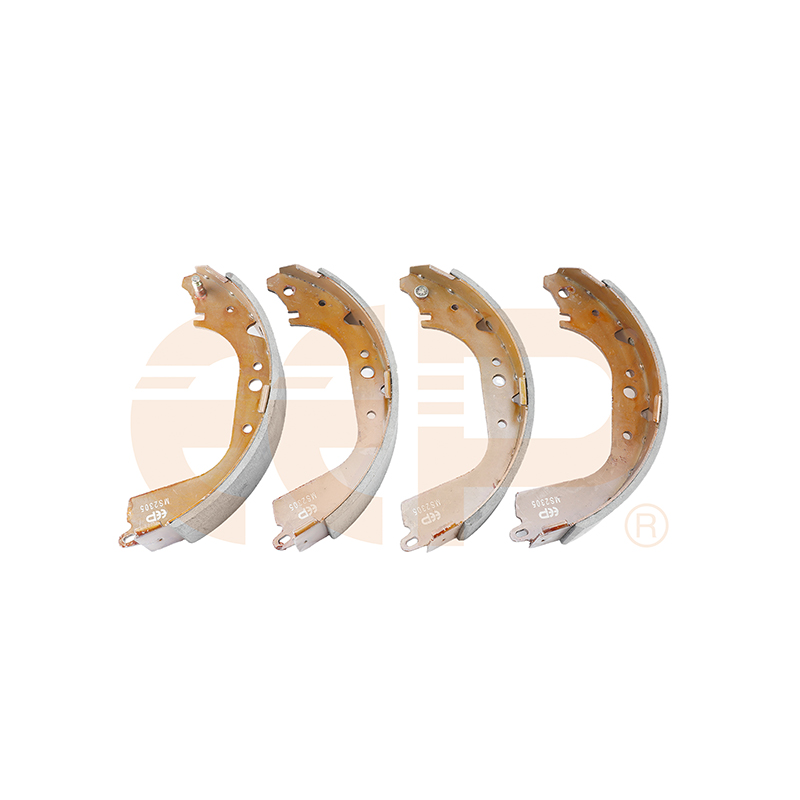
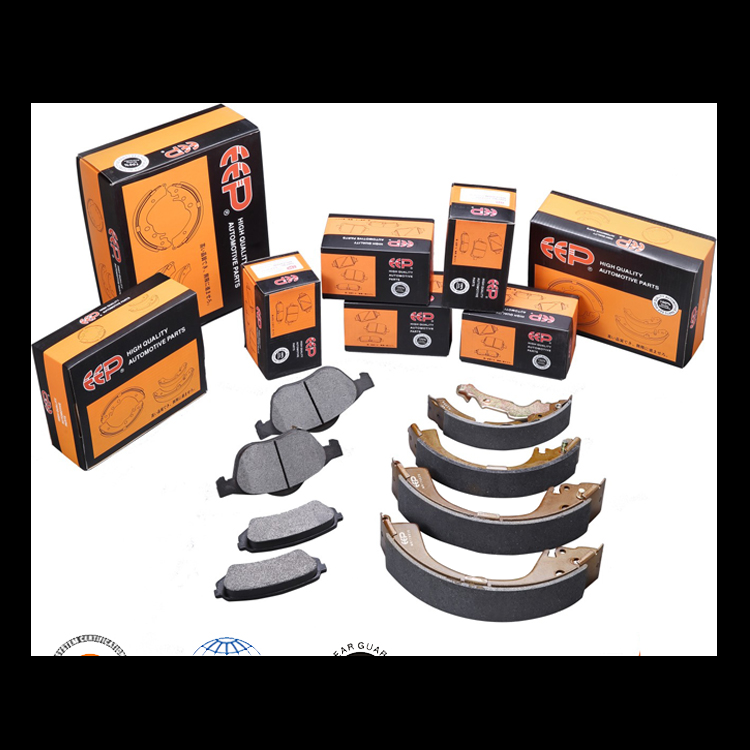
Brake Shoes
When the driver depresses the brake pedal, the brake master cylinder transmits the pressure to the brake sub-pumps of each wheel through the hydraulic system. The piston in the brake sub-pump extends outward under pressure and pushes the brake shoes to rotate around their fixed pins, so that the friction pads on the brake shoes and the inner surfaces of the brake drums are tightly adhered to each other. Due to the friction between the friction pads and the brake drum, the rotation of the brake drum is hindered, thus slowing down or even stopping the wheels and realizing the braking of the vehicle.
Product Description
| Car Model | for Toyota Honda Nissan Mazda Mitsubishi Subaru Hyundai Kia |
| Part Number | For Japanese & Korean Cars, OEM Standard |
| Material | Semi-metallic |
| MOQ | 10 PCS |
| Service Life | 30,000-60,000KM |
| Delivery | 1-7 days for stock items, 30-60 days for production items |
QC Quality
1. Stable and Efficient Braking:
Composite friction materials provide stable friction coefficients, ensuring reliable and responsive braking forces at different temperatures (from cold to high).
2. Excellent Wear Resistance and Durability:
High hardness reinforced fibers/fillers significantly reduce wear rate, extend service life, and reduce replacement frequency.
3. Excellent Resistance to Thermal Degradation:
The high-temperature resistant resin/ceramic component effectively resists the heat generated by intense braking, preventing a significant decrease in friction force (thermal degradation) at high temperatures and ensuring continuous braking safety.
4. Low Noise and Environmentally Friendly Compatibility:
Optimize material formula to reduce brake screaming and vibration, and enhance comfort; Low metal/asbestos free formula reduces dust pollution, protects wheel hubs and the environment, and is compatible with mainstream brake discs.